Jazz Lessons Course
Jazz guitar has a mellow tone, complex chords, a splash of Blues and theory-rich solos to name a few characteristics. All of which you’ll learn in the Jazz style lessons below. In these videos you’ll learn different standard Jazz chord progressions, cornerstone 7th chords, extended guitar chords and harmony and even some Gypsy Jazz. We’ll also show you techniques of the greats like Joe Pass, Wes Montgomery and Stanley Jordan. So grab your guitar, turn your distortion off, and check out this incredible guitar style.
If there are any concepts here that you feel are too advanced, or if you're still learning how to play guitar, hop over to the Guitar Fundamentals Course 2, Blues Course 1 and Blues Course 2. The Fundamentals Course will be a refresher of some foundational guitar techniques you’ll need to tackle advanced Jazz concepts. The Blues courses are essential since the genre of Jazz was developed from the Blues.
Top Artists


Rhythm Guitar Beginner Topics
Rhythm guitar in Jazz is all about the rhythm and timing. Learn the best ways to keep time and specific Jazz style guitar rhythms. Plus, understand basic Jazz guitar chord voicings.
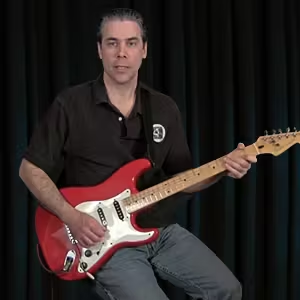

Christopher will introduce you to major 7th chords. This tutorial assumes you already know & can play basic barre chords & barred, movable chords. In this tutorial you will learn to play various voicings of major 7th chord shapes rooted on the E, A and D strings.

Christopher will introduce you to minor 7th chords. This tutorial assumes you already know & can play basic barre chords & barred, movable dominant 7th chords. In this tutorial you will learn to play various voicings of minor 7th chord shapes rooted on the E, A and D strings.

In this tutorial we will practice a variety of major 7th & minor 7th chords shapes. The goal here is to play & switch between these chords in time with a backing track. This tutorial assumes you already understand and can play the chord shapes. By the end of this tutorial you should be able to play a variety E, A and D string rooted major 7th & minor 7th chord voicings along with a backing track.

In this tutorial we'll learn the basics of Jazz rhythm guitar playing. We'll use some Major 7th, Minor 7th and Dominant 7th chords to play some common Jazz style chord progressions that will make up a practice tune in the key of C Major set to a backing track.

In this tutorial we'll take a look at some basics of Jazz rhythm guitar playing within a Minor key center. We'll use a variety of 7th chords to play some common Jazz style chord progressions that will make up a practice tune in the key of A Minor all set to a backing track.

In this tutorial we'll learn more about jazz rhythm guitar playing. We'll go in depth by exploring some useful jazz voicings from shapes you may already be familiar with. We'll play some common jazz extension chords such as 7ths, 9ths, and even some 6/9 chords. All the progressions we will be working on will make up a practice tune in the key of C Major set to a backing track.

In this tutorial we'll learn more about jazz rhythm guitar playing. We'll go in depth by exploring some useful jazz voicings from shapes you may already be familiar with. We'll use some major 7th, minor 7th and dominant 7ths chords to play a typical jazz style chord progressions in the key of C minor. We'll also add a couple of other jazzy sounding chords into the mix. Eventually we'll play our practice tune in time with a backing track.
Rhythm Guitar Intermediate Topics
Learn more complex swing rhythms and Jazz guitar harmony like chord extensions and chord progressions including all versions of the 7th chord.

In this tutorial we'll go in depth into jazz rhythm playing. We'll be playing some more complex swing rhythms and we'll do a deeper dive into jazz harmony. We'll then apply it to various chord progressions that will make up a practice tune in D Minor all set to a backing track.

This tutorial is about extended harmony chords. This covers types of 11th and 13th chords. This tutorial assumes you already know & can play 7th and 9th chord forms & shapes. It also assumes you have worked through Extended Harmony Chords Series 1 and 2. We will extend the concept of triadic harmony to include the 7th, 9th, 11th and 13th of: dominant 11th, minor 11th, dominant 13th, dominant flat 13th. We will learn how to play these as chord shapes rooted on the E, A and D strings. Then we will play them in a jazzy chord progression with a backing track.

This tutorial is about extended harmony chords. We will learn types of 9th chords. This tutorial assumes you already know & can play those more basic 7th chord forms & shapes. It also assumes you have worked through Extended Harmony Chords Series 1. We will extend the concept of triadic harmony to include the 7th and the 9th of: 6/9ths, minor 9th, dominant 9th, dominant 7th flat 9th, dominant 7th flat sharp 9th (also called dominant 7th flat augmented 9th). We will learn how to play these as chord shapes rooted on the E, A and D strings. Then we will play them in a jazzy chord progression with a backing track.

This tutorial is about extended harmony chords, covering 7th chords beyond dominant 7ths, major 7ths and minor 7ths. This tutorial assumes you already know & can play those more basic 7th chord forms & shapes. We will extend the concept of triadic harmony to include: diminished 7ths, dominant 7th/flat 5th, minor 7th/flat5th, and minor/major 7th chords. We will learn how to play these as chord shapes rooted on the E, A and D strings. Then we will play them in a jazzy chord progression with a backing track.

In this tutorial we'll go in depth into jazz rhythm playing. We'll be playing some more complex swing rhythms and along with a deeper dive into jazz harmony. We'll do a quick explanation of how chord extensions work within jazz harmony and then apply it to various chord progressions that will make up a practice tune in F Major all set to a backing track.
Rhythm Guitar Advanced Topics
Learn advanced professional Jazz guitar techniques like upper structure chord voicings, comping rhythms and techniques, as well as walking bass lines.

In this tutorial we'll dive into advanced jazz rhythm guitar playing. We'll further go into chord shapes that involve upper structure extensions and voicings that are appropriate for playing in a group. All the progressions we will be working on will make up a practice tune in the key of Bb Major set to a backing track.

In this tutorial we're covering more advanced jazz rhythm guitar playing in a minor key context. We are further exploring more upper structure voicings including more line clichés, augmented shapes, and also passing diminished chords as well. All the progressions we will be working on will make up a practice tune in the key of A minor set to a backing track.

In this introduction to jazz style rhythm guitar, we'll cover the three primary characteristics of jazz as a distinct genre of music: sophisticated harmony, swing rhythm, and improvisation. We'll look at an 'A' section and a 'B' section, learning the chord changes and some rhythm variations; we'll also do play alongs for each section at different tempos.

In the following lessons there is a typical jazz chord progression with full chord voicings rooted on the E and A strings. Then we'll learn an essential jazz guitar approach called shell voicings. A shell voicing is only playing a few notes of any given chord. Just enough to suggest or imply the chord without cluttering up the arrangement with full voicings. After we learn two different shell voicing options for each chord of the progression, then we'll learn some specific rhythm patterns to use while playing all those different chord voicings. Finally we'll put the whole thing together and play those different chords and rhythms along with a backing track to get a lot of practice at using these new ideas and skills.

Christopher will show you a four chord turnaround, then add the bass line notes that connect the chords. Playing a bass note in between each chord fills in the time between each chord and creates the sound of motion "walking" from one chord to the next.
Lead Guitar Beginner Topics
Start playing Jazz guitar solos. We'll start with the basics in major keys, utilizing chord tones, playing with passing tones, and keeping that swing rhythm.


In this tutorial we'll build on the basics of jazz lead playing using a classic minor chord progression that contains elements used in countless songs from the standard jazz repertoire. This is very different from the key center approach that we use in blues and rock soloing, and for that reason it can be both inspiring and very challenging to explore.

In this tutorial we'll build on the basics of jazz lead playing using a classic major chord progression that's been used in countless songs from the standard jazz repertoire. If you come to this from blues and rock, this will be an entirely different approach to soloing where instead of staying in the key center through the changing chords, we now follow each of the chords and build our ideas from those shapes.

In this tutorial I'm going to show you some basic elements of jazz lead guitar. We'll learn a couple lead lines to play over a common minor chord progression. Our lines will showcase jazz elements such as utilizing chord tones, passing tones, and swing rhythm. We'll use these elements to build lines we can use over each chord in our progression. Then we'll start practicing these lines to a backing track so we can start to get comfortable playing them and eventually incorporate them into our playing.

In this tutorial we'll learn some basic elements of jazz lead guitar. We'll play some lines that demonstrate jazz vocabulary over a common major key chord progression. One of the central elements of jazz guitar soloing is playing the changes. This means targeting certain notes within a scale that outline each chord in the progression. When playing the changes, you can emphasize chord tones and then embellish by using other scalar and chromatic notes.
Lead Guitar Intermediate Topics
We’ll look at more complicated Jazz guitar soloing concepts in major and minor keys plus we’ll start applying modes to your repertoire.

In this tutorial we'll explore some really pretty sounding intermediate jazz lead playing. This time within a minor key. We'll base most of our lead lines on specific chord tones that change to follow the underlying harmony. This requires that you're very familiar with the chord shapes and the structure of the harmony, but once you have that down I think you'll see how this approach is actually quite simple and straightforward.

In this tutorial we'll explore some fun and classic sounding ways to improvise over a very common jazz progression in a major key. We'll use a simple motif and adapt it to fit all the changing chords, so that we sound like we're playing through the changing chords as opposed to getting knocked around by them all.

In this tutorial we'll explore some cool sounding intermediate jazz lead playing within a minor key. Our lead lines will follow the harmony closely, and most of our phrases will be based on chord tones with some colorful chromatic lead-in notes. We'll also look at how the rhythm of your phrases really help make your soloing sound exciting.

In this tutorial we'll explore some cool sounding intermediate jazz lead playing within a major key. First we'll learn the chords in each section and then we'll build our phrases off of a combination of chord tones, scale runs and chromatic movement. We'll also look at how the rhythm of your phrases really help make your soloing sound exciting.
Lead Guitar Advanced Topics
Take your Jazz soloing chops to the next level by upping the tempo, focusing further on chord tones instead of scale patterns, and building your ability to "play the changes."

This tutorial is an introduction to Jazz style lead guitar. We'll cover the three primary characteristics of jazz as a distinct genre of music: sophisticated harmony, swing rhythm and improvisation. We'll learn how the essence of lead guitar in jazz style is "playing the changes". We'll learn how to build and play chord scales that follow the chords of a stereotypical jazz progression. We'll also learn how to build and play arpeggio lines that are based on the extended harmony chords typically found in a jazz tune.

In this final set of lessons on the style of master Joe Pass, we're going to learn how to play jazz lead lines. As always, we'll start with an overview of the concepts, then we'll look at using chord tones to solo, then practice chord tones with a backing track. After that we'll use scale tones to solo, also followed by a practice lesson with a backing track. We'll then break down two Joe Pass style lead lines, and follow it up with combining them.

In this tutorial we'll explore some more advanced jazz leads in a minor context and at a faster tempo. We'll do this by first learning and familiarizing ourselves with the chord progressions of each section and then for our leads we'll approach each of the chords individually or two at a time, using chord tones, chromatic passing notes and scale movement.

In this tutorial we'll explore some advanced jazz lead playing within a major key and at a faster tempo. Rather than relying on scales, we'll build our lines based on chord tones, so first we'll get really familiar with the underlying harmony, and then we'll use that knowledge to come up with some cool and catchy jazz lead lines.
Jazz Subgenres

In this tutorial we continue our study of Bossa Nova in a major key. The chordal movement, tonal ambiguity, and complexity increases a bit in our practice tune that we will use to study and eventually put together in a performance play along video at the end.

In this tutorial we'll learn a Bossa Nova melody in A minor. This melody will cover 3 song sections: an intro/outro, verse, and chorus. Each section will present different Bossa Nova jazz inspired melodic ideas. We'll cover melodic and rhythmic motifs, how to easily position our fretting hand to play these melodies, and we'll also cover some more theoretical ideas on how these melodies relate to the harmony that's played underneath. After we learn each section of our practice melody tune, we will put it all together in a performance play along video all set to a backing track.

In this tutorial we'll explore a really cool and very iconic sound, commonly known as Gypsy Jazz, in the style of the great Django Reinhardt, who was one of the most important guitarists in the playing and development of this sound. This is a style of jazz traditionally played on acoustic guitars with instantly recognizable grooves, note choices and embellishments. You can spend a whole life studying this style of music, but even in the very early stages it's a fun and surprisingly accessible sound to explore.

In this tutorial we will cover the basics of Bossa Nova guitar. We'll learn just a few of the basic rhythm hand patterns, along with some common chord types and shapes that are essential to this style. From there we will incorporate these elements into a practice tune in a major key that will culminate in a play along.

In this tutorial we will cover more of the basics of Bossa Nova guitar, but time in a minor key. We'll learn just a few of the basic rhythm hand patterns, along with some common chord types and shapes that are essential to this style. From there we will incorporate these elements into a practice tune in a minor key that will culminate in a play along.

In this tutorial we are working through an advanced Bossa Nova tune in a Major Key. We will build on concepts from the previous tutorials and as usual put it all together in a play along performance video at the end. Besides diving into some more complex progressions, we will also be incorporating some very syncopated rhythms. In the chorus, we will throw some alternating bass notes into the mix. This opens up our rhythm playing and gives us a whole new perspective on fingerstyle guitar.

In this tutorial we are working through an advanced Bossa Nova tune in a minor key. We're continuing to build on techniques and concepts from the previous tutorials. Throughout these lessons we are building to put it all together in a play along performance video all set with some really great sounding backing tracks. We will continue to incorporate some alternating bass notes into our fingerpicking rhythms. While this is totally optional, I highly recommend jumping into this next step when you are ready. The payoff is worth it for the rhythmic and harmonic variety.

In this tutorial we'll explore a cool and laid back sound known as modal jazz. In this style we tend to spend a little bit more time on each chord, which gives us more space to create some interesting sounds in our lead lines, as opposed to constantly having to adapt to the fast changing chords, which is often the case in other types of jazz. We'll explore a practice tune that uses the bittersweet mode known as dorian.

In this tutorial we'll explore a cool and laid back sound known as modal jazz. In this style we spend a bit more time on each chord, giving us more space to create some interesting sounds with our lead lines. We'll explore a practice tune that uses the beautiful and dreamy mode known as lydian.
Jazz Blues Style
Augment the Blues by adding more sophisticated Jazz harmony, chromatic playing and shell voicings.

Christopher will show you how to modify a basic 12 bar blues into a jazzy sounding piece of music. We'll cover chromatic approaches, secondary dominant chords, shell voicings. Next we'll play the chords as arpeggios in order to learn an important aspect of jazz blues guitar called "playing the changes". Finally we'll put it all together in a play along with a backing track.

Christopher will show you how to modify a basic 12 bar blues into a jazzy sounding piece of music. We'll cover chromatic approaches, secondary dominant chords, shell voicings. Next we'll play the chords as arpeggios in order an important aspect of jazz blues guitar: "playing the changes".
Chord Melody Style
The chord melody technique involves playing more than one part at a time. For example, playing a bass line along with higher register chord tones to suggest a melody.

Christopher will explain the basics of chord melody style playing in a jazz context. The basic technique involves playing or suggesting more than one part at a time. In this case, a bass line along with higher register chord tones that suggest a melody. We'll start by applying this technique to major 7th chords, dominant 7ths chords, and minor 7th chords. Then we'll put them together to play along with some backing tracks.

Christopher will expand on the basics of chord melody style playing in a jazz context. The basic technique involves playing or suggesting more than one part at a time. In this case, a bass line along with higher register chord tones that suggest a melody. We'll expanded the bass line to a complete octave with upper voicings of major 7th chords, dominant 7ths chords, and minor 7th chords. Then we'll put them together to play along with some backing tracks.

Christopher will expand on the basics of chord melody style playing in a jazz context. In this tutorial we'll focus on making all the upper register scale notes available for a melody line. We'll still keep a bassline going along with chord tones from major 7th chords, dominant 7ths chords, and minor 7th chords. Then we'll put them together to play along with some backing tracks.
Jazz Artist Studies
Learn pro guitar techniques from legendary Jazz guitarists like Joe Pass, Wes Montgomery, Django Reinhardt and Stanley Jordan.
In this tutorial we'll explore a really cool and very iconic sound, commonly known as Gypsy Jazz, in the style of the great Django Reinhardt, who was one of the most important guitarists in the playing and development of this sound. This is a style of jazz traditionally played on acoustic guitars with instantly recognizable grooves, note choices and embellishments. You can spend a whole life studying this style of music, but even in the very early stages it's a fun and surprisingly accessible sound to explore.


This tutorial on gypsy jazz takes you through some of the basics of Django Reinhardt's style: from learning the rhythm guitar in two different progressions through some basic exercises on scales, arpeggios, and chromatic licks. This will bring you to a point where you can start to put these things together and start playing in the style of this jazz legend.

In this series of lessons we're going to take a some of the elements of the style from the great Joe Pass, jazz guitar giant: how to orchestrate in his style by using jazz guitar drop 2 chord voicings and walking basslines. First I'll introduce the concepts to you, then show you how to play them. Then I'll show you how to use voice leading with these concepts, and finish off by putting everything together in a blues context.

In this second series of lessons in the style of jazz legend Joe Pass, we'll expand on the first series and apply drop 2 voicings and walking basslines to three typical types of 7th chords. First we'll look at what we'll be learning in this set, then learn drop 2 voicings with major 7th chords, minor 7th chords, and dominant 7ths. Next we'll learn how to use all three chord types in a progression, and we'll conclude with putting everything together.

Now we're going to move on to the third set of lessons in the style of Joe Pass, and learn to extend our drop 2 voicings and walking basslines across the fretboard. We'll start by examining the basic concepts here, then learn how to walk the G7 drop 2 voicing along the neck. Next we'll break down how to keep walking those chord voicings way up the entire fretboard, and we'll end by putting things in context and practicing the concepts.
In this final set of lessons on the style of master Joe Pass, we're going to learn how to play jazz lead lines. As always, we'll start with an overview of the concepts, then we'll look at using chord tones to solo, then practice chord tones with a backing track. After that we'll use scale tones to solo, also followed by a practice lesson with a backing track. We'll then break down two Joe Pass style lead lines, and follow it up with combining them.

In this artist study, you'll learn some of the elements in the style of Wes Montgomery's playing: the use of octaves, the technique of playing with your thumb, and the style in which Wes used chords and single note lines. HP Kruesi will set all this against a backdrop of backing tracks in swing, latin, and latin pop styles.
Essential Jazz Songs
As with any style of music, you’ll learn a ton by playing songs within the genre. Listed below are classic Jazz pieces that you can use to test out your new skills; songs from Al Jolson, Isham Jones, Irving Berlin and other classic Jazz artists.

"(Back Home Again In) Indiana" with music by James F. Hanley is a classic public domain jazz standard written in 1917. This song has been covered by many artists. This tutorial is a two guitar arrangement of the tune with a rhythm guitar part playing the chord progression and a lead guitar part playing the melody and a solo.


Christopher will show you a two guitar arrangement of this classic jazz song. Guitar 1 is a rhythm guitar part playing the chord progression. Guitar 2 is a lead guitar part playing the single note melody of the song. Guitar 2 also plays a solo that is based on the melody with embellishments. This is a great opportunity to learn how to use some extended harmony chords in a song setting, how to learn to embellish a melody with some typical lead guitar vocabulary in an early jazz style.

Christopher will show you how to play a chord melody version of this classic jazz song. Chord Melody style guitar playing is playing a solo arrangement of a tune by playing the melody, some supporting bass notes and, or chords all at the same time. Usually, this involves playing a jazz standard, a song from the "Great American Songbook", but it doesn't necessarily have to be. Many jazz standards are tunes original written for Broadway musicals and Vaudeville shows of the early 20th century, pop tunes, or early film favorites.
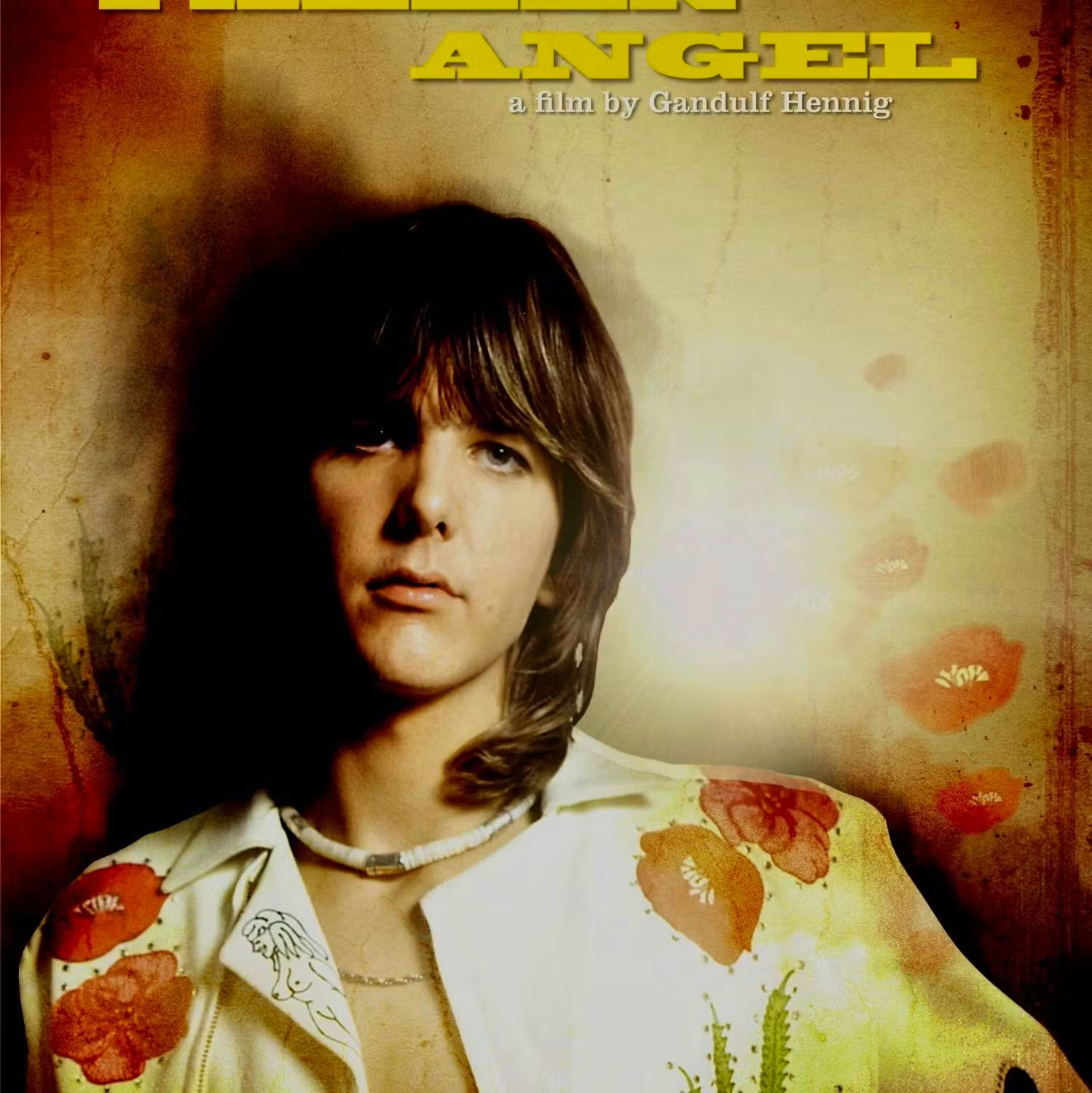

This is a two guitar arrangement of this classic jazz song. Guitar 1 is a rhythm guitar part playing the chord progression. Guitar 2 is a lead guitar part playing the solo. This is a great opportunity to learn how to use some extended harmony chords in a song setting, how to learn to embellish a melody with some typical lead guitar vocabulary in an early jazz style.


Christopher will show you a two guitar arrangement of this classic jazz song. Guitar 1 is a rhythm guitar part playing the chord progression. Guitar 2 is a lead guitar part playing the single note melody of the song. Guitar 2 also plays a solo that is based on the melody with embellishments. This is a great opportunity to learn how to use some extended harmony chords in a song setting, how to learn to embellish a melody with some typical lead guitar vocabulary in an early jazz style.
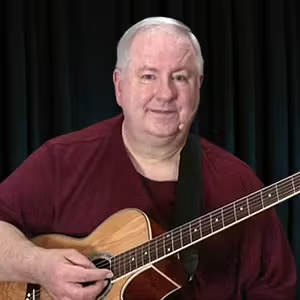

In addition to learning about how fingerstyle jazz works as far as the right hand is concerned, you will also learn many advanced chord shapes such as M7, min 7, aug 5, flat 5, 9th, 11th, 13th, etc.


This is a two guitar arrangement of this classic jazz song. Guitar 1 is a rhythm guitar part playing the chord progression. Guitar 2 is a lead guitar part playing the solo. This is a great opportunity to learn how to use some extended harmony chords in a song setting, how to learn to embellish a melody with some typical lead guitar vocabulary in an early jazz style.


Christopher will show you a two guitar arrangement of this classic jazz tune. Guitar 1 is a rhythm guitar part playing the chord progression. Guitar 2 is a lead guitar part playing the single note melody of the song. Guitar 2 also plays a solo that is based on the melody with embellishments. This is a great opportunity to learn how to use some extended harmony chords in a song setting, how to learn to embellish a melody with some typical lead guitar vocabulary in an early jazz style.


Tom will show you both beautiful guitar parts to this instrumental, from the smooth chord comping to the melodic soloing.

Douglas will show you Willie Nelson's version of this jazz standard as it's played in a slow 12/8 swing feel, on an acoustic guitar. It also features a harmonica solo you'll learn on electric guitar, and lots of cool licks at the end of the song.


In this song tutorial, Anders Mouridsen will teach you the song "How Sweet It Is (To Be Loved By You)" as made famous by James Taylor. This one has an arrangement that's quite full of instruments, and in these lessons we'll look at the role of guitar in a rhythm section. Anders will talk about the tone, the basic triad inversions, the rhythm approaches in the sections of the song, the sax solo on guitar, and the final fills - then a full performance!

"I Ain't Got Nobody" by Spencer Williams is a classic public domain jazz standard written in 1915. This song has been covered by many blues and jazz performers. This is a two guitar arrangement of a medium tempo jazz standard. Guitar 1 is a rhythm guitar part playing the chord progression. Guitar 2 is a lead guitar part playing the single note melody of the song. Guitar 2 also plays a solo that is based on the melody with embellishments. This is a great opportunity to learn how to use some extended harmony chords in a song setting, how to learn to embellish a melody with some typical lead guitar vocabulary in an early jazz style.
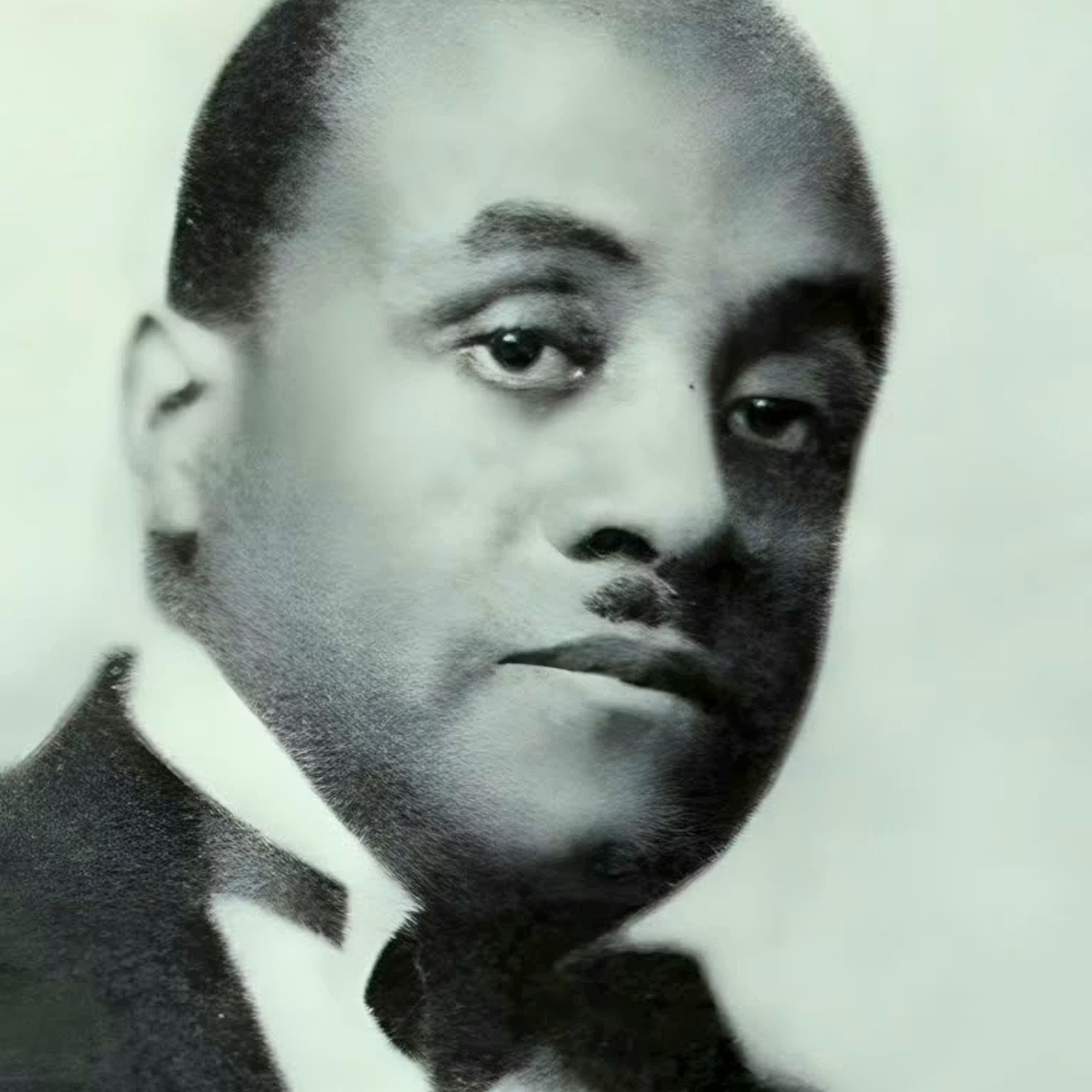

This tutorial is a two guitar arrangement of the tune with a rhythm guitar part playing the chord progression and a lead guitar part playing the melody and a solo. Guitar 1 is a rhythm guitar part playing the chord progression. Guitar 2 is a lead guitar part playing the single note melody of the song. Guitar 2 also plays a solo that is based on the melody with embellishments. This is a great opportunity to learn how to use some extended harmony chords in a song setting, how to learn to embellish a melody with some typical lead guitar vocabulary in an early jazz style.


Christopher will show you a two guitar arrangement of this classic jazz tune. Guitar 1 is a rhythm guitar part playing the chord progression. Guitar 2 is a lead guitar part playing the single note melody of the song. Guitar 2 also plays a solo that is based on the melody with embellishments. Both guitar parts use some elements of gypsy jazz style playing. This is a great opportunity to learn how to use some extended harmony chords in a song setting, how to learn to embellish a melody with some typical lead guitar vocabulary in an early jazz style.

Christopher will show you a two guitar arrangement of this classic jazz ballad. Guitar 1 is a rhythm guitar part playing the chord progression. Guitar 2 is a lead guitar part playing the single note melody of the song. Guitar 2 also plays a solo that is based on the melody with embellishments. This is a great opportunity to learn how to use some extended harmony chords in a song setting, how to learn to embellish a melody with some typical lead guitar vocabulary in an early jazz style.

Christopher will show you a two guitar arrangement of this classic jazz song. Guitar 1 is a rhythm guitar part playing the chord progression. Guitar 2 is a lead guitar part playing the single note melody of the song. Guitar 2 also plays a solo that is based on the melody with embellishments. This is a great opportunity to learn how to use some extended harmony chords in a song setting, how to learn to embellish a melody with some typical lead guitar vocabulary in an early jazz style.


This is a two guitar arrangement of an iconic jazz tune. Guitar 1 is a rhythm guitar part playing the chord progression. Guitar 2 is a lead guitar part playing the single note melody of the song. Guitar 2 also plays a solo that is based on the melody with embellishments. This is a great opportunity to learn how to use some extended harmony chords in a song setting, how to learn to embellish a melody with some typical lead guitar vocabulary in an early jazz style.


"Somebody Loves Me" by George Gerswhin is a classic public domain jazz standard written in 1924. This song has been covered by many blues and jazz performers. In this tutorial we'll learn a two guitar arrangement of this medium tempo jazz standard. Guitar 1 is a rhythm guitar part playing the chord progression. Guitar 2 is a lead guitar part playing the single note melody of the song. Guitar 2 also plays a solo that is based on the melody with embellishments. This is a great opportunity to learn how to use some extended harmony chords in a song setting, how to learn to embellish a melody with some typical lead guitar vocabulary in an early jazz style.


Christopher will show you how to play the chord progression and the melody to this classic blues song. Guitar 1 is a rhythm guitar part playing the chord progression. Guitar 2 is a lead guitar part playing the single note melody of the song. There is also a basic chord melody version later in the tutorial.

Christopher will show you how to play the chord progression and the melody to this classic blues song. Guitar 1 is a rhythm guitar part playing the chord progression. Guitar 2 is a lead guitar part playing the single note melody of the song. There is also a basic chord melody version later in the tutorial.

This is a two guitar arrangement of this classic jazz song. Guitar 1 is a rhythm guitar part playing the chord progression. Guitar 2 is a lead guitar part playing the single note melody of the song. Guitar 2 also plays a solo that is based on the melody with embellishments. This is a great opportunity to learn how to use some extended harmony chords in a song setting, how to learn to embellish a melody with some typical lead guitar vocabulary in an early jazz style.

In this tutorial we will learn a more advanced version of 'Take Me Out To The Ball Game', the classic American tune about baseball in a jazz chord melody style.

This is a two guitar arrangement of this classic jazz song. Guitar 1 is a rhythm guitar part playing the chord progression. Guitar 2 is a lead guitar part playing the single note melody of the song. Guitar 2 also plays a solo that is based on the melody with embellishments. This is a great opportunity to learn how to use some extended harmony chords in a song setting, how to learn to embellish a melody with some typical lead guitar vocabulary in an early jazz style.

Christopher will show you how to play the chord progression and the melody to this classic tune song. Guitar 1 is a rhythm guitar part playing the chord progression. Guitar 2 is a lead guitar part playing the single note melody of the song.
FAQ
What guitar is used for jazz?
Jazz guitarists often use hollow-body or semi-hollow electric guitars. These guitars produce a warm, smooth tone that’s perfect for jazz.
What is the difference between jazz guitar and acoustic guitar?
The main difference is in the build and sound. Jazz guitars are usually hollow or semi-hollow electrics that produce a mellow, rich tone, while acoustic guitars have a more resonant and bright sound due to their full, hollow bodies.
What is the most used guitar in jazz?
The Gibson ES-175 is one of the most iconic and commonly used guitars in jazz. Its rich tone and versatile sound make it a favorite among jazz musicians.
Does jazz guitar use a pick?
Yes, many jazz guitarists use a pick, but some prefer fingerstyle to achieve a softer and more nuanced sound.
Why do jazz players use small picks?
Small picks offer more control and precision, which is crucial for the complex chord voicings and fast, intricate lines common in jazz.
What are the fundamentals of jazz guitar?
Fundamentals include mastering chord voicings, scales, arpeggios, and developing a strong sense of rhythm and timing. Improvisation and understanding jazz harmony are also key.
How to be good at jazz guitar?
Practice regularly, listen to lots of jazz, learn from great players, and focus on improvisation and music theory. Joining jam sessions and playing with others helps a lot too.
What makes a jazz guitar different?
Jazz guitars are typically hollow or semi-hollow electrics designed to produce a warm, smooth tone. They often feature flatwound strings and have a larger body compared to other electric guitars.
What to practice as a jazz guitarist?
Focus on scales, arpeggios, chord voicings, and improvisation. Transcribing solos and studying jazz standards are also crucial for developing your style and understanding jazz music.
What special skill does the jazz player have?
Jazz players excel at improvisation and have a deep understanding of music theory and harmony. They can create spontaneous, complex solos and adapt to various musical situations effortlessly.
Need Extra Help with your playing?
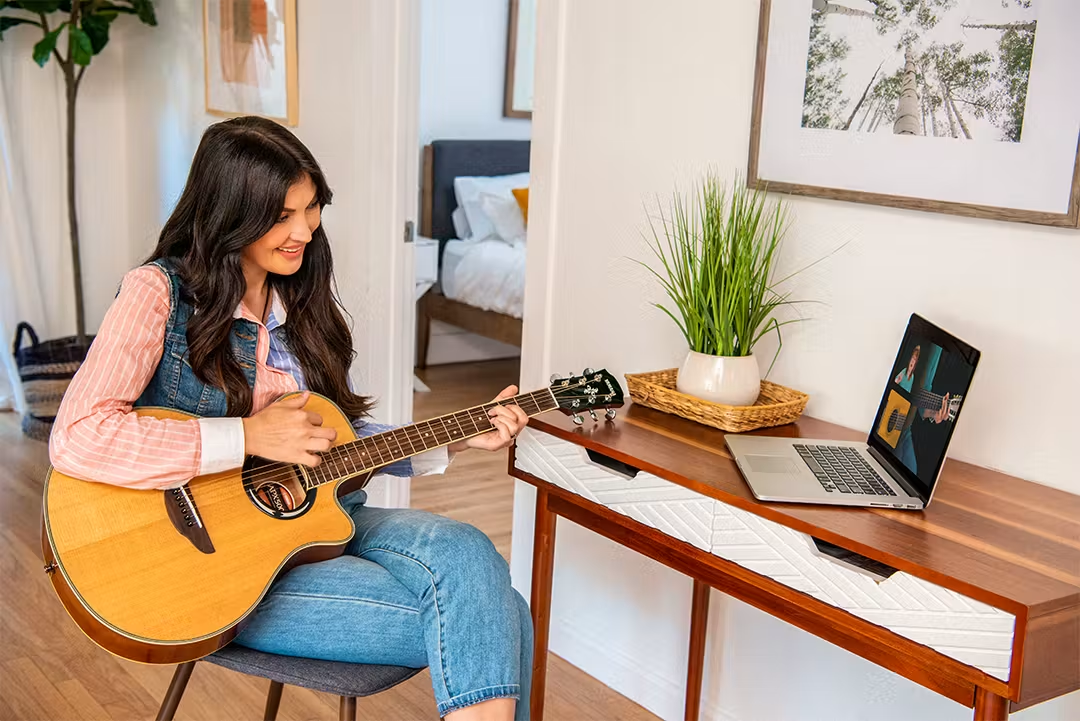
Book A Private Lesson
Schedule a 30 or 60 minute lesson with a coach who can offer advice and guidance to improve your playing.

Request A Custom Lesson Plan
Whether you’re just starting to play or returning from a long break, a guided practice plan can get you to where you want to be sooner.