In Short...
Learn guitar efficiently and don't waste time
-Learn open chords
-Do basic guitar fretboard notes memorization
-Learn easy guitar scales
-Focus on one guitar style
-Don't get distracted by other guitarists journey
Learning how to play guitar in your 40s, 50s, or beyond isn’t just possible—it might be the best time to start.
Many beginners over 40 fall into the trap of feeling like they need to make up for lost time and try to learn everything at once.
The key is to slow down and focus on the fundamentals that really move the needle.
Open Chords First
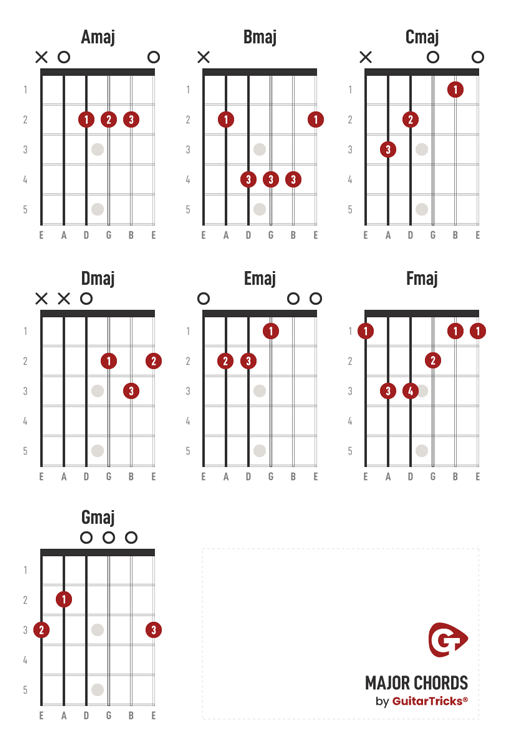
Start with mastering your open chords—learn what makes up each chord (root, third, fifth), and you’ll understand how to use those shapes up the neck with confidence.
It’s a bit of theory, sure, but applying it makes learning guitar so much smoother.
Fretboard Work
Next up, memorize the natural guitar fretboard notes.
Knowing where every F or E lies makes chord finding and soloing way easier.
If you’ve ever wondered how guitarists know where to go without looking lost, this is it.
Basic Guitar Scales
Then, match your open chords with open guitar scales.
If you’re playing a C major chord, learn the C major open scale.
Do the same for G, E, and the rest.
It builds serious fretboard awareness and lets you play lead guitar and riffs with ease.
Pick One Genre
Here’s the fun part—pick one style and go deep.
Whether it’s ‘90s grunge, classic rock, or surf guitar, laser-focus on the techniques and tone of that genre.
Dive into power chords, barre chords, drop D tuning, or reverb-heavy surf tones.
You’ll get “lost” in a good way.
Focus On Your Journey
And finally, remember—being older means you know how to manage your time better.
Don’t compare yourself to kids shredding on Instagram.
Your journey is your own, and consistent practice will pay off.
FAQ
What age is too late to learn guitar?
There’s no such thing as “too late” to learn guitar. Plenty of people start in their 40s, 50s, 60s and beyond—and many find it incredibly rewarding because they’re learning for themselves, not for school or a job.
Is it hard to learn guitar at an older age?
It might be a bit more challenging physically—like finger dexterity or hand strength—but with consistent practice, older adults can absolutely learn guitar. In fact, adults often have more patience and focus, which can be a big advantage.
What is the 80/20 rule guitar?
The 80/20 rule (aka the Pareto Principle) in guitar means that 80% of your progress comes from 20% of your practice activities. It’s all about identifying the small handful of exercises or songs that give you the biggest improvement and focusing your energy there.
How long does it take to learn guitar as an adult?
If you practice regularly, you can start playing simple songs in a few weeks to a couple months. Getting really comfortable and confident might take 6–12 months, depending on your goals and how much you practice.
How many hours a day should I practice guitar?
Even 20–30 minutes a day goes a long way if you stay consistent. More time is great, but focused, mindful practice matters more than just clocking in hours.
Can you self teach guitar?
Yes, you can definitely teach yourself guitar—especially with all the online lessons, YouTube videos, and apps available today. That said, having a structured course or occasional guidance can really speed things up and help avoid bad habits.